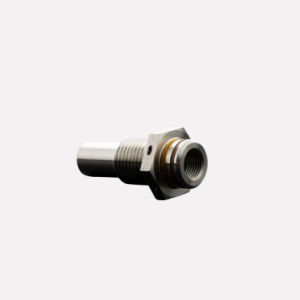
More information about Pyrotechnic Through Bulkhead Initiator (TBI)
View product detailsTightness of pyrotechnics in missile propulsion performance for Defense - by Sylvain
Expertises and Technologies
01.10.2025
(09-14-2023) - Strengths of Pyrotechnics for defense critical missions : pyrotechnic equipment tightness contribute to missile propulsion
Missile propulsion systems rely on every component performing flawlessly throughout storage and operation.
Among the critical design requirements, pyrotechnic equipment tightness plays a fundamental role in ensuring propulsion efficiency, mission reliability, and operational safety.
In this Expert’s Pitch, a Pyroalliance specialist explains how tightness is engineered into pyrotechnic equipment to preserve the performance of both solid and turbo propulsion systems, even after years of storage.
Why is pyrotechnic equipment tightness essential?
Tightness is a critical feature because it guarantees that propulsion systems operate exactly as designed when the mission begins.
Whether the missile uses solid or turbo propulsion, any leakage can compromise system performance. By integrating hermetic sealing directly into the equipment design, pyrotechnic components maintain their integrity until activation.
This design approach helps ensure maximum propulsion efficiency while reducing the risk of performance degradation.
Tightness in solid propulsion systems
Preventing pressure loss in the combustion chamber
For solid propulsion systems, maintaining pressure inside the combustion chamber is essential to achieving the expected thrust.
Even a minor leak can reduce chamber pressure, resulting in lower propulsion performance and potentially affecting mission success.
A hermetic barrier designed for reliability
The Through Bulkhead Initiator (TBI) incorporates an internal hermetic barrier that remains perfectly sealed before, during, and after activation.
One of its key advantages is that the detonating signal is transmitted without creating any physical breach in the sealing system. As a result, tightness is guaranteed by design throughout the component’s operating life.
Tightness in turbo propulsion systems
Protecting the liquid fuel circuit
For turbo propulsion applications, the primary leakage risk concerns the liquid fuel tank and its associated fuel circuit.
To eliminate this risk, “normally closed” pyrotechnic valves are designed to remain completely sealed until the exact moment the mission requires the fuel system to open.
Long-term storage without compromising performance
Missile systems may remain in storage for several years before deployment. During this period, the sealing performance of the valve must remain unchanged.
Pyrotechnic valves are specifically engineered to provide absolute tightness throughout storage, ensuring that the propulsion system is ready whenever required.
Why are pyrotechnic valves uniquely reliable?
Unlike conventional valve technologies, pyrotechnic valves achieve sealing through their mechanical design.
The valve remains completely closed until activation. Opening can only occur by intentionally breaking a hard structural part of the valve body using the pyrotechnic mechanism.
This design principle delivers several important benefits:
- Absolute tightness during storage.
- Reliable activation when commanded.
- Protection of the liquid fuel system.
- Consistent propulsion performance.
Tightness by design: a key contributor to missile propulsion performance
Missile propulsion depends on highly reliable pyrotechnic equipment capable of maintaining perfect sealing throughout storage and operation.
For solid propulsion, hermetic barriers preserve combustion chamber pressure. For turbo propulsion, pyrotechnic valves ensure that liquid fuel remains securely contained until the precise moment of activation.
By delivering tightness by design, these technologies directly contribute to propulsion efficiency, operational readiness, and overall mission success.