See more about Pyroalliance's Flight Termination Systems (FTS)
Download the GUARD&FLY BrochureFlight Termination System GUARD&FLY® – illustrated application through launch of “HANBIT-Nano” South-Korean launcher
Applications & Marchés
16.04.2026
Pyroalliance has recently demonstrated the reliability of its off-the-shelf FTS solution – GUARD&FLY® – at the occasion of the first commercial launch mission ‘SPACEWARD’ with HANBIT-Nano, the first commercial launch vehicle developed by INNOSPACE, launched from the Alcântara Space Center in Brazil.
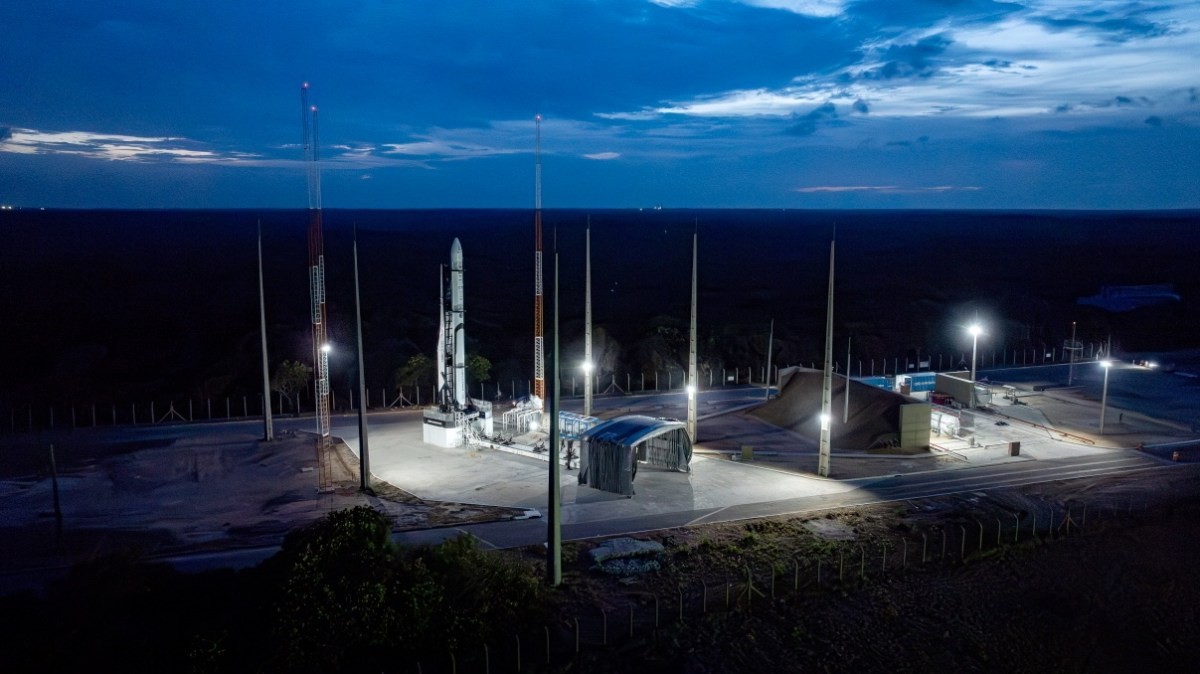
Flight Termination System (FTS) GUARD&FLY® by Pyroalliance – application through launch of South-Korean launcher “HANBIT-Nano”
Our customer INNOSPACE and its HANBIT-Nano launcher
INNOSPACE is a South Korean space platform provider specializing in satellite launcher manufacturing and orbital launch services.
Founded in 2017, the company is developing hybrid rocket and liquid methane engines-powered small satellite launchers (HANBIT) to provide low-latency, low-cost, and reliable launch services in today’s rapidly expanding small satellite market.
The followings are INNOSPACE’s HANBIT series:
HANBIT-Nano (height 21.8m and diameter 1.4m) is a two-stage space launch vehicle capable of carrying a 90kg payload to a 500km Sun-Synchronous Orbit (SSO) with a 25-ton hybrid rocket engine on the first stage.
It is available in 2 versions – HyPER and LiMER – depending on the motorization of the second stage which can use either the hybrid rocket engine, HyPER, or the liquid methane engine, LiMER.
HANBIT-Micro (height 22.5m and diameter 1.4m) will add a kick-stage to HANBIT-Nano and thus be capable of carrying a 170kg payload to a 500km.
HANBIT-Mini (height 39.6m and diameter 3.7m) is a three-stage space launch vehicle capable of placing a payload weighing 1,300kg into a 500km SSO.
It is equipped with:
- nine 25-ton hybrid rocket engines in the first stage,
- one 25-ton hybrid rocket engine in the second stage,
- and two 3-ton liquid methane engines in the third stage.
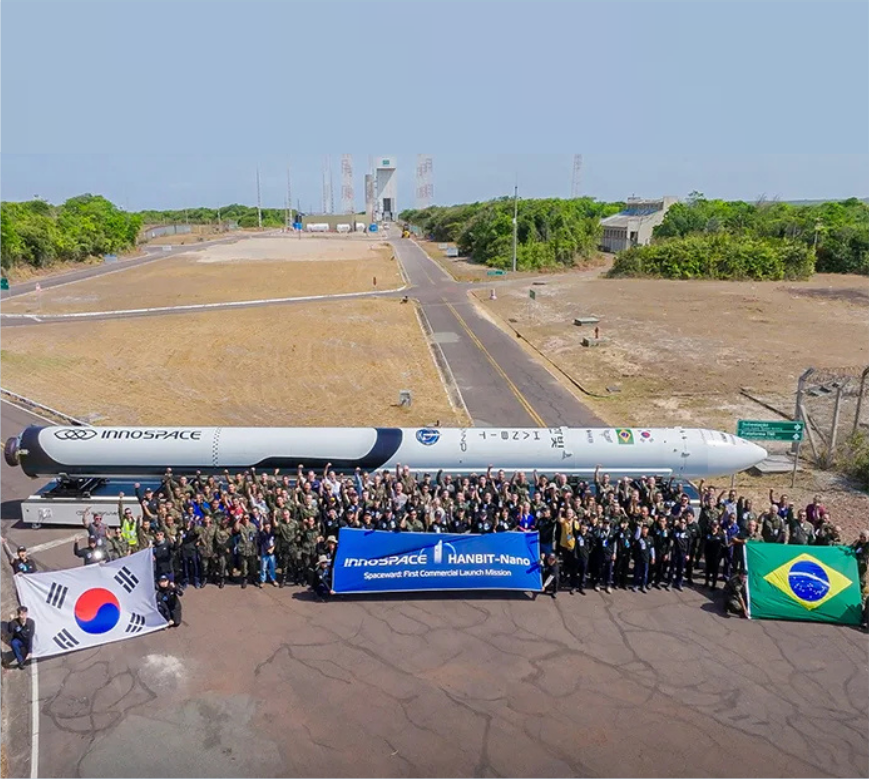
The HANBIT-Nano Launcher in the Alcântara Space Center - ©INNOSPACE
INNOSPACE team members together with officials from the Brazilian Air Force and the Brazilian Space Agency pose with the company’s first commercial launch vehicle HANBIT-Nano at the Alcântara Space Center in Brazil.
The Alcântara Space Center
The Alcântara Space Center (Centro Espacial de Alcântara, CEA) is a space port and launching facility of the Brazilian Air Force (FAB) in the city of Alcântara, located on Brazil’s northern Atlantic coast and only 1250km away from the European Space Port of Kourou.
The Brazilian Air Force (Comando da Aeronáutica) has operated since the 1980s and has been in particular the site operated for the various launches of the VLS Brazilian Launcher Program (Veículo Lançador de Satélites).
The CEA is very close to the Equator, what gives the launch site a significant advantage for launching satellites into geosynchronous orbits, same advantage as for the Guiana Space Centre.
The CEA accommodates several launch pads. In 2023, INNOSPACE established its own launch pad for the launch of HANBIT-TLV, a one-stage test launch vehicle with a 15-tons-class hybrid engine on the first stage.
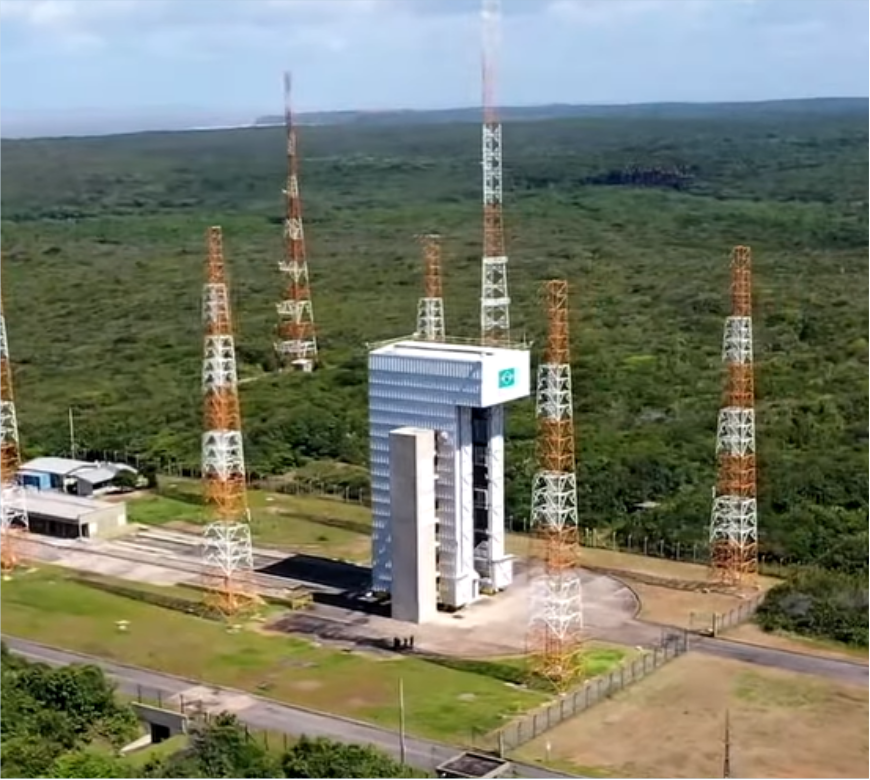
The historical VLS launch pad – ©Centro Espacial de Alcântara
Due to its location, the Alcântara Space Center is well-positioned for geosynchronous launch.
The HANBIT-Nano maiden flight: Flight Overview & Post-Flight Analysis
Following a joint investigation conducted in cooperation with Brazil’s Aeronautical Accidents Investigation and Prevention Center (CENIPA).
And the Alcantara Space Center, INNOSPACE identified the cause of the HANBIT-Nano mission termination through detailed analysis of flight data, video records, and recovered debris.
HANBIT-Nano lifted off from the launch pad at 10:13 p.m. BRT on December 22 and began ascending along its planned vertical trajectory.
The first-stage main engine, a 25-ton-class hybrid rocket engine, ignited successfully and demonstrated stable performance during the initial flight phase with flight data transmitted normally following liftoff.
33 seconds into flight, combustion gas leakage occurred at the forward section of the first-stage hybrid rocket combustion chamber assembly, resulting in a rupture of the combustion chamber and the subsequent separation of the launch vehicle into multiple parts.
Shortly thereafter, the vehicle separated into several sections and descended, impacting the ground within the designated safety zone.
No injuries or additional facility damage were reported.
The leakage was caused by insufficient compression and uneven sealing performance resulting from plastic deformation of sealing components during the reassembly process following the replacement of the forward chamber plug during launch preparation activities in Brazil.
Based on these findings, INNOSPACE plans to strengthen assembly processes and quality management procedures.
The company will also implement certain design improvements and upgrades to related components and conduct additional functional verification procedures.
According to INNOSPACE, this marked the world’s first flight record for a hybrid rocket engine in the medium-to-large scale thrust class, demonstrated on a launch vehicle.
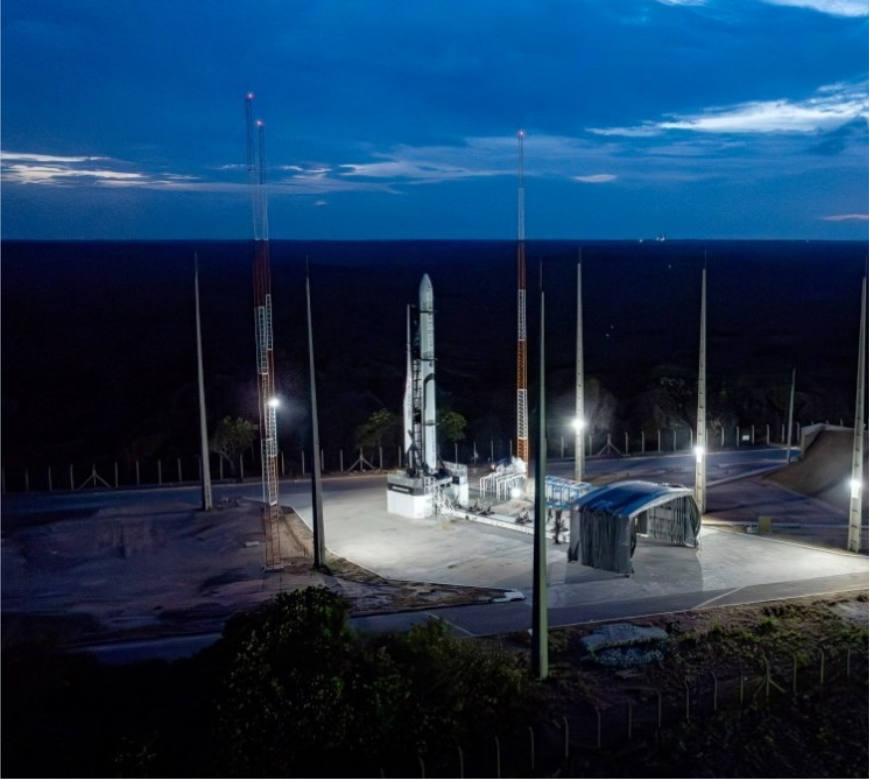
HANBIT–Nano on its launch pad – ©INNOSPACE
Overview of INNOSPACE’s HANBIT-Nano launch vehicle at the Alcântara Space Center, Brazil (2025, December 19)
The successful execution of the flight termination procedure
So as to explain the triggering of the FTS, it appears that after approximately 30 seconds of nominal flight the vehicle sustained structural damage of an undetermined cause, leading to separation into multiple sections and indications of first-stage engine thrust termination.
As a result, the vehicle lost propulsion and attitude control and entered free fall, separating into the first stage, second stage, and smaller debris fragments.
The FTS was then activated in accordance with procedures pre-coordinated with Brazilian safety authorities.
According to INNOSPACE, the successful execution of the flight termination procedure under anomalous conditions has demonstrated the maturity of the vehicle’s safety design and successful operational coordination between the launch operator INNOSPACE and the launch site authorities of FAB.
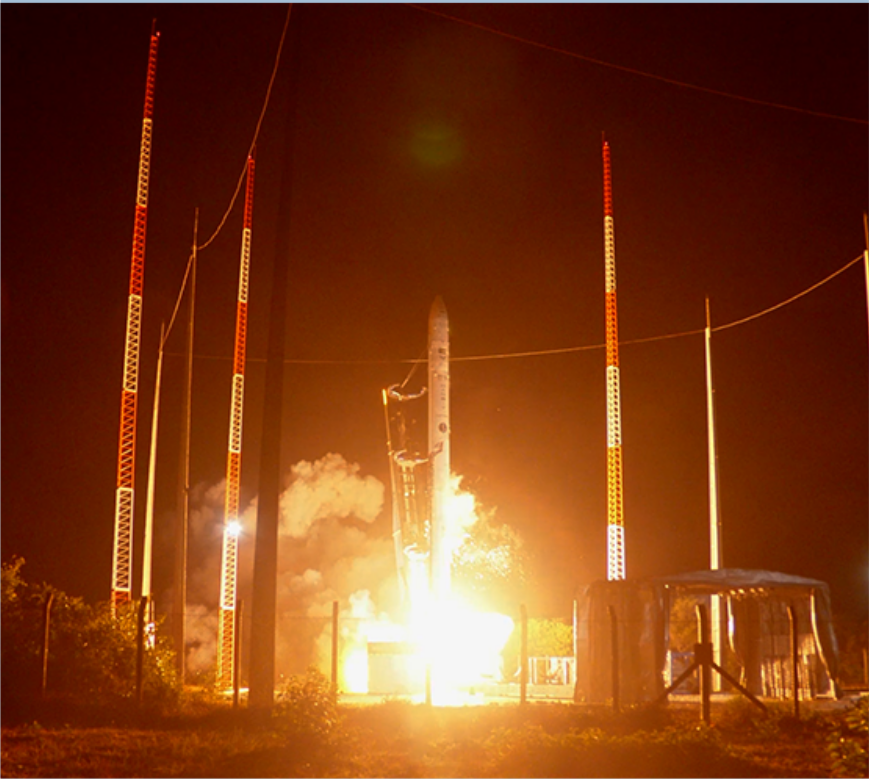
INNOSPACE’s First Commercial Mission ‘SPACEWARD’ - ©INNOSPACE
HANBIT-Nano lifting off from the Alcântara Space Center in Brazil (2025, December 22)
Why Pyroalliance?
Pyroalliance has been a trusted supplier of European launcher families Ariane and Vega for several decades now, supplying them with many kinds of pyrotechnic equipment among which FTS.
Consequently, over the time Pyroalliance has aggregated very significant background in that field and has more recently developed a new generation of products for the most recent European launchers Ariane 6 and Vega-C currently operated at the European Space Port in Kourou (French Guiana).
The related technologies have been the basis on which Pyroalliance has built an off-the-shelf offer of FTS available for new launchers.
Pyroalliance and INNOSPACE have initiated a cooperation in 2024 with an order received to supply different FTS components for the first of the HANBIT series.
The Pyroalliance’s GUARD&FLY® family
Pyroalliance indeed offers a family of off-the-shelf solutions for FTS that is perfectly suited for the rapidly emerging market of small launchers.
This offer is named GUARD&FLY®, referring to its function that is to “safeguard” populations and ground infrastructures in case things turn unexpectedly bad during the flight.
It is based on a set of flight proven bricks which, once assembled, compose a generic architecture for Flight Termination: Safe&Arm Devices (SADs), Detonators, Detonating Transfer Lines and Linear Shaped Charge (LSC) Devices.
Upon decision of the ground authorities, the FTS is activated to safely terminate the mission in a controlled manner: the above-described pyrotechnic chain is triggered and the LSC proceed to the severance of the launcher’s tanks, leading to the controlled breakup of the launcher.
The FTS thus secures the ending of the mission in a safe mode where only tiny debris fall on the ground, avoiding possibly dramatic consequences.
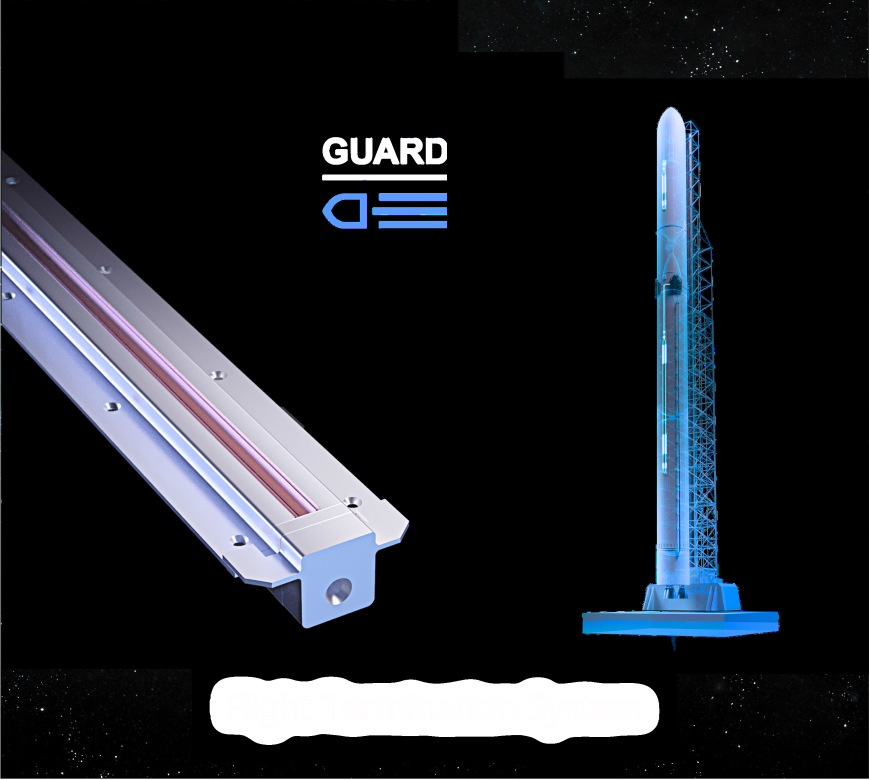
Complete Flight Termination System by Pyroalliance - ©PYROALLIANCE
Pyroalliance’s flight termination system family GUARD&FLY® is dedicated to the Flight Termination function which is a mandatory function required to terminate the flight in case of hazard.
HANBIT – What’s next?
Through this launch, INNOSPACE secured critical flight and engineering data essential for validating the launch vehicle’s performance and further improving launch reliability.
The data obtained during the mission will be used to support the technical corrective measures identified through the investigation, including strengthening assembly processes and quality management procedures, implementing component upgrades and design improvements, and conducting additional functional verification tests.
The exact schedule for the follow-up launch will be finalized after the completion of technical corrective measures and the receipt of launch authorization from the Korea AeroSpace Administration (KASA).
INNOSPACE plans to conduct the follow-up launch in Brazil within the third quarter of this year using an already secured launch slot.
The next flight will also be equipped with FTS components supplied by Pyroalliance.